
Table of Contents
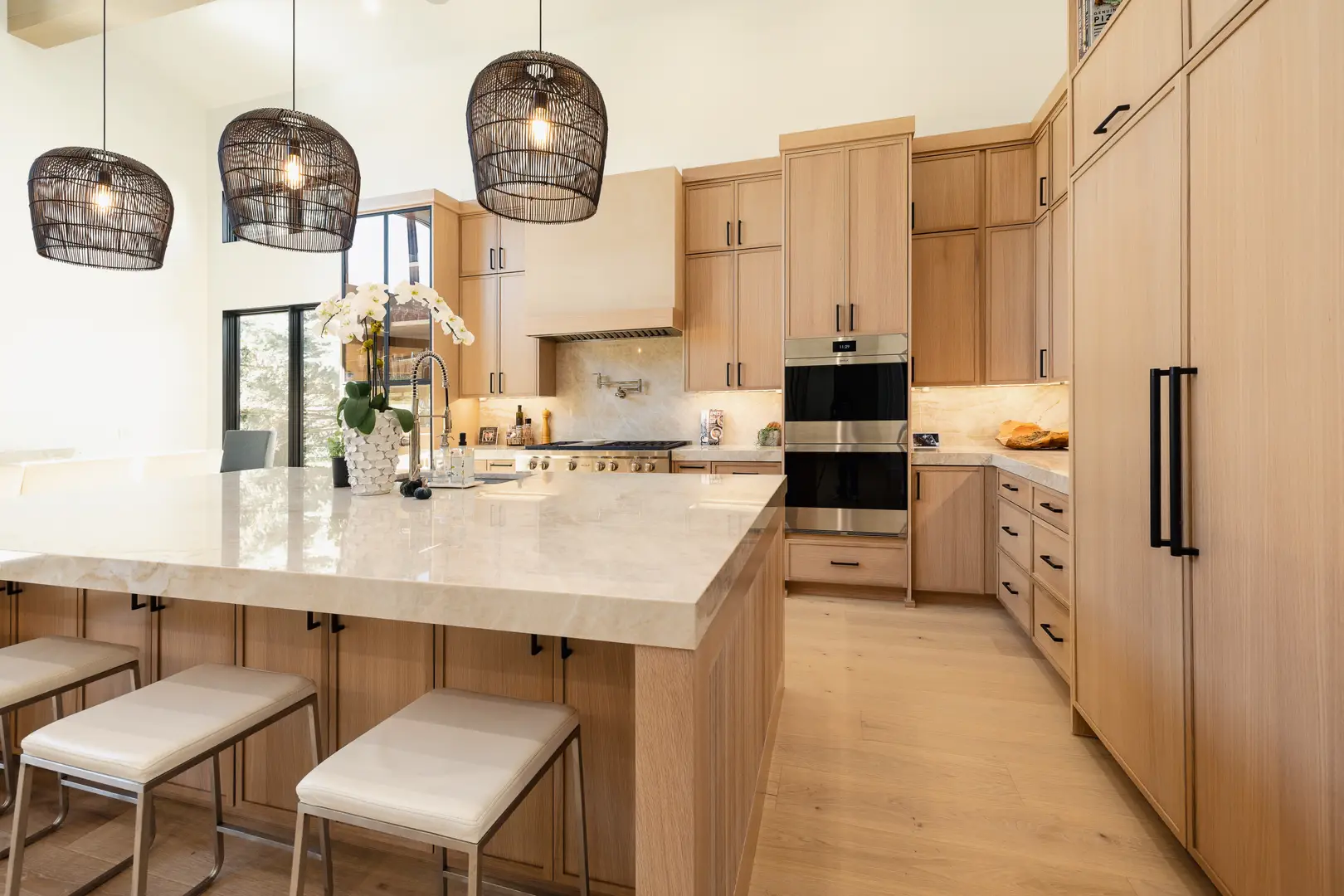
While the color, style, finish, and hardware you choose for your cabinetry make a difference in the feel and look of a space, the most important decision you’ll make during a remodel is choosing the right cabinet materials. What you use to build your cabinets can affect their durability, appearance, maintenance requirements, and long-term value.
Below, we will explain the differences between cabinet materials to help you make the best decision for your home’s style, your budget, and your everyday needs.
1. Durability and Everyday Use
You use your cabinets every day, especially the ones in your kitchen, bathroom, and laundry room. Opening doors, pulling out drawers, stacking heavy dishes, and cleaning up spills can all put stress on cabinetry over time.
The quality of materials plays a significant roll in how well cabinets hold up to daily wear and tear. Solid wood, plywood, medium-density fiberboard (MDF), and particleboard each have different characteristics that influence their performance.
Contractors often use plywood for cabinet boxes because of its layered construction, superior strength, and moisture resistance. For face frames and cabinet doors, they often use solid wood because it has a clean appearance and exceptional durability.
Some homeowners choose MDF because it provides a smooth, consistent surface for painting, and some opt for budget-friendly particleboard to save on upfront costs.
Ultimately, the best material depends on how you will use your cabinets, where you’re installing them, your budget, and the level of durability you want.
2. Appearance and Finish
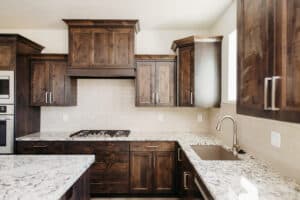
Cabinet materials also influence the overall appearance of a room. If you like the look of natural wood grain, you may want to invest in solid wood or wood veneer. Both of these options offer natural variations in color and grain and bring warmth and character to a space.
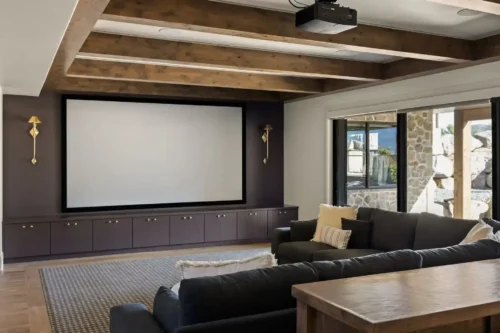
If you prefer painted cabinetry, MDF may be a better option because you can achieve a smooth, consistent finish compared to other materials. It’s also an ideal material for detailed door profiles and contemporary cabinet designs.
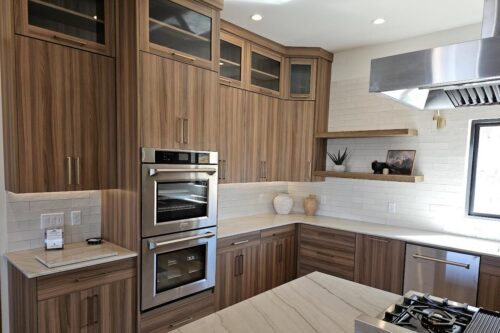
Thermally fused laminate and other engineered materials can also give cabinets a clean, uniform appearance. Consider going in this direction if you want a specific color, pattern, or wood-look finish.
Choosing the right material not only has a big impact on the longevity of your cabinets but also on the overall look of the space.
3. Moisture and Humidity
Kitchens, bathrooms, and laundry rooms often experience humidity, splashes, and spills. When selecting materials for your cabinets, consider how they will hold up to excess moisture.
Solid wood often expands and contracts as humidity changes, while MDF and particleboard can swell if water penetrates the material. Plywood offers good structural performance, but it is not completely waterproof, often suffering damage from prolonged exposure to moisture.
Fortunately, cabinet finishes, edge sealing, construction methods, and installation quality can all help with moisture protection. When it comes to areas near sinks, dishwashers, washing machines, or other water sources, you should discuss material options with a cabinet professional.
After you have installed your new cabinets, ensure you have proper ventilation, fix leaks promptly, and clean spills quickly to extend the life of your cabinetry.
4. Maintenance Requirements
Different cabinet materials require different levels of care. Natural wood cabinetry may need occasional cleaning to preserve its finish and appearance, while painted cabinets may require touch-ups if the finish becomes chipped or scratched.
Laminate and thermally fused laminate surfaces often only need a quick wipe down with a soft cloth and mild cleaning solution. Avoid abrasive cleaners and harsh chemicals, as these can cause damage.
Before selecting materials, consider how much maintenance you can handle. This will help you choose materials that fit your lifestyle. A busy household may benefit from durable, easy-to-clean surfaces, while another homeowner who likes the look of natural wood may be willing to provide the additional care required.
5. Budget and Long-Term Value
Custom cabinetry is a significant investment, so you should consider more than the initial purchase price. Lower-priced materials may help reduce upfront expenses, but their long-term performance and value depend on their quality, construction, installation, and intended use.
High-quality materials can look better and provide more dependable structural support, but that doesn’t mean the most expensive option is the best choice for your project.
When comparing cabinet quotes, ask what materials are used for the cabinet boxes, doors, drawer boxes, and shelving. A clear understanding of these components can help you compare options accurately.
Invest in Cabinet Materials That Meet Your Needs
Cabinet materials affect much more than the appearance of your kitchen, bathroom, or storage space. They influence durability, moisture resistance, maintenance requirements, construction quality, and long-term value. By understanding your options, you can make choices that support both your design vision and everyday needs.
If you’re unsure what materials to choose, the cabinet professionals at Rasmussen Custom Cabinetry can help.